I’ve Got Dumplings to Make
*Editor’s Note: This essay won first place in our 2026 creative non-fiction writing contest. This year’s theme was ‘In Flux’
In late January, about a month before the New Year—the real one—every Dongbei family would rinse their suancai crocks in their yards until their stony surfaces glisten and drip. They would be too heavy to lift up, and people would roll them by their base until they ballet twirl to where they need to be. To a child who’s yet to be one crock tall, they would look almost holy. Prehistoric, leviathan things, cold to the touch, gulping up all the sounds from its surroundings until the world reverberates in its cavity.
Then cabbages. Heaps and heaps of them, boiling in pots and pans until the leaves no longer squeak crisp, until they soften and relent and give. Then salt, palmfuls, layers, so that the cabbages may die a clean and sanitised death. Then a mouthful of baijiu—the whitest liquor—to burn away any last trace of impurities. Then darkness. You’ll need the heaviest rock you can find in your proximity to close the crock shut, to allow some privacy for their anaerobic farewell, to weigh down on their slow demise so that they transform instead of rot. Then, you wait and believe. Answers will emerge from it.
Snow will fall at some point. The cabbages will freeze and thaw and cave to the ways of the earth. The earth will know what to do with them, the way a hibernating mammal would know when to wake and a flower would know when to bloom. By New Year’s Eve it should punch the pads of your tongue and you should chop it with pork mince to make a filling for your dumplings, to be had on New Year’s Day.
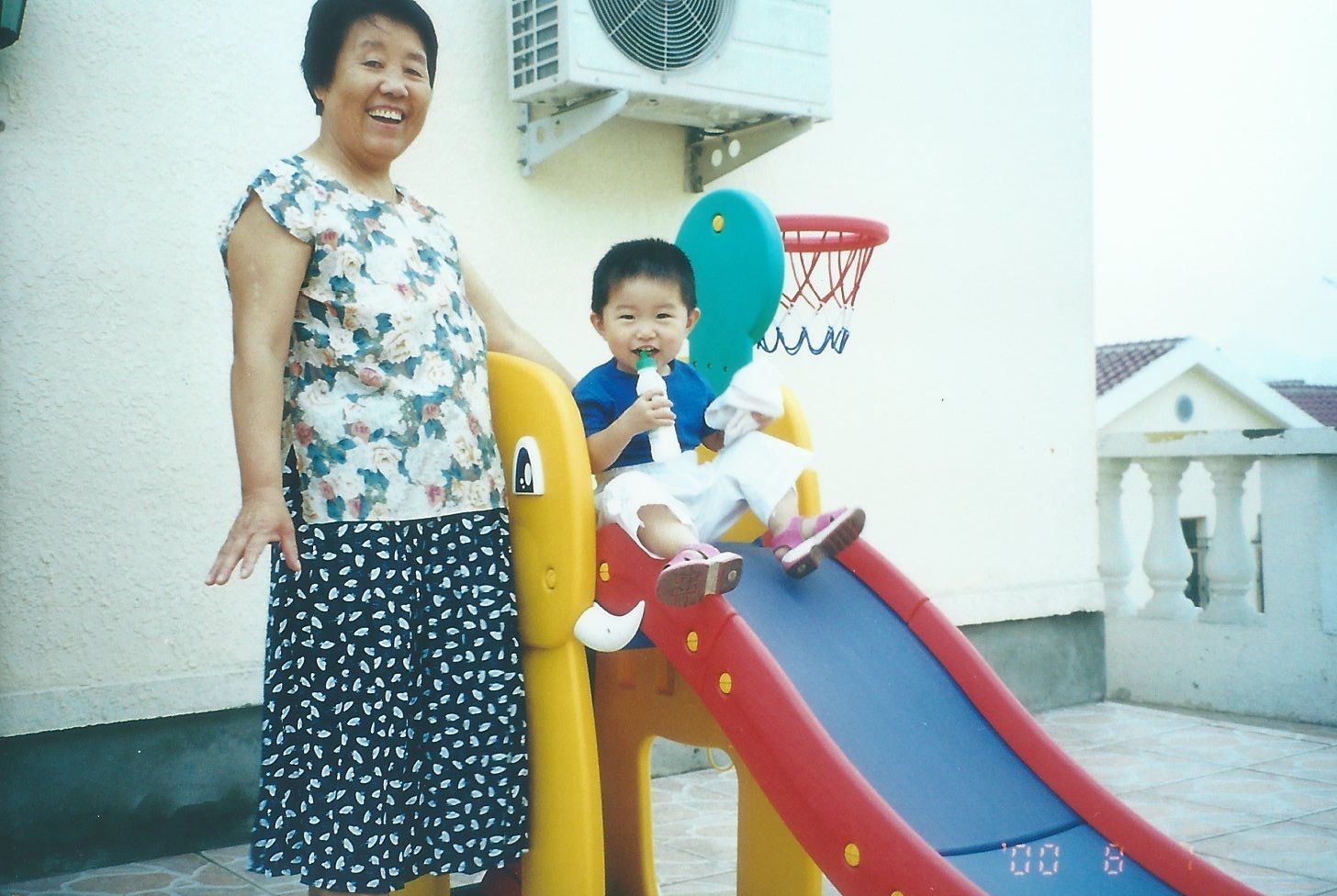
My grandma was the one who taught me how to make dumplings. She also led all of our suancai operations—for it did feel like war—by carefully pacing around the house to finesse our techniques. If her knees were kind enough to her on a good day, she would slowly crouch down to sit on a low stool and give the fresh cabbages some affectionate pats. I would be somewhere near her, inhaling her snowflake cream scent.
She died on an incredibly sunny morning in January and language stopped. Her death was not like a clichéd train that screeched to a halt—that would’ve been quite the luxury, an exuberant amount of time for us to gear up. Some deaths sweep fast like a vaporisation. We came out of the hospital morgue afterwards and our shadows on the ground have barely moved since we rushed her into the emergency room. Everything around us was horrifyingly normal. My cousins and I went to a KFC for lunch. We had burgers and chicken nuggets and overdiluted cokes and for a brief second, nothing felt wrong at all. Then one of us said that we’ll be here in this moment over and over again, all of us, starting from now, grandpa, our parents, each other.
Most days shrivelled and became nothing of significance. I got a manicure. I went on dates with strangers. I scraped burnt bits of toast crumbs from the little tray at the bottom of the machine that’s designed to catch them. I woke up from a dream where I held her head to help her get out of bed and for a moment I forgot that I no longer have her here. I felt the dampness of her hair at my fingertips and it was as real as everything else.
The thing with grief is that most days you float along, forgetting, and some days you remember. Most days you wait for life to grow five times bigger and wider to swallow the loss whole, and some days you wait for the roaring tide to retreat. Most days you function and perform and play the hands you were dealt with. Some days you cry when you smell the ripeness of the cabbage and chop your rotting heart. Every day stumbles and stutters ahead and some days you are left behind. You make a run for it.
The third New Year without her, I couldn’t head back home to bow at her grave like I usually do, because the world’s greatest empire in which I live is still deciding if I’m worthy enough to be naturalised. If I have earned the privilege to be here, the privilege to be turned away at crowded emergency rooms because I’m not dying enough, the privilege to fund a genocide and back an ambassador who’s in the Epstein files with my taxes, the privilege to exist in perpetual fear that one day I’ll need to wake up and pack the past decade of my meagre existence into a suitcase.
I get on the Tube and envy those who never had to leave where they were born, the consistencies of their single-file selves, the way their thoughts and their tongues stack neatly together like snow, the way their milestones and identities sit in a row like pills in my grandma’s pill box. It was still half full when she died. I envy the way they walk with the certainty that their names will never be mispronounced, their faces will never attract questions about their upbringings, their accents will never be witchhunted. I envy the way they can always leave and remain according to their will, and their wills would never require any explanations. The thing with oppression is that most days it feels like a distant itch, and some days it floods.
The thing with love is that I still dream of her when it gets tough to breathe. Sure enough, she will emerge at the most unexpected turns of events, in scenarios that she shouldn’t really appear in, smiling at me, reaching out to me, telling me to simply go on because it is the only thing we can do in this long life. In fact, we were never supposed to be always finding out, to demystify and control and arrange, to know so much and believe so little, to always rush and never wait. We were always supposed to experience time in motion, its smooth and tireless glide, like the way winds would constantly crease sand dunes in silence. We were always supposed to surrender ourselves and our work to its simplicity, to trust that everything will change and sometimes for the better.
The thing with love is that I believe her.
The thing with love is that I’ve got some dumplings to make.