
Story of a Name
Director Mary Stephen opens this year's Hong Kong Film Festival UK with a profoundly personal investigation into her hidden family history.
The annual Hong Kong Film Festival UK returns to London for the fourth time with a new wave of cinema exploring identity, migration, modern Hong Kong's drastic socio-political upheaval, as well as its complicated colonial past.
The festival, which runs from 25 September to 4 October, will this year spotlight diaspora as agency and the ways in which migrant filmmakers portray memory, identity, colonialism and activism.
Perfectly embodying this theme is the festival's opening film, Palimpsest: The Story of A Name.
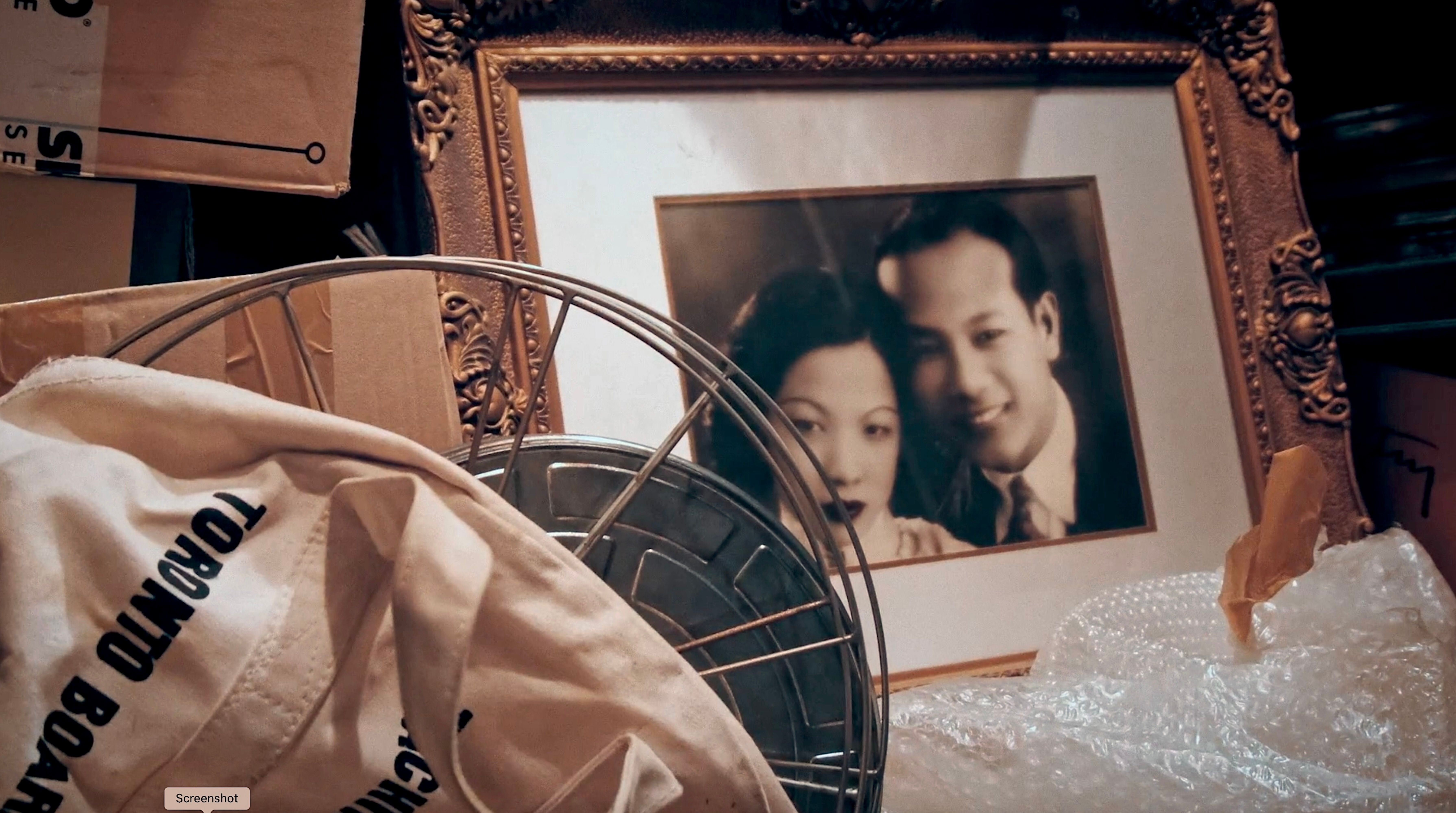
Directed by Mary Stephen, a veteran Hong Kong-born, Paris-based filmmaker and editor, Palimpsest is a profoundly personal documentary investigating the lifelong mystery behind her Western surname.
Drawing on her father’s diaries and private film archives, Stephen uncovers a murky family history borne out of deep-seated ambition and familial tensions against the backdrop of British Hong Kong’s colonial past.
Family-history documentaries are hardly new, but Stephen’s career as an editor gives Palimpsest a distinctive cinematic quality. After immigrating to Montreal with her family in the late 1960s and moving to Paris in the 1970s, she began a 30-year professional partnership with Éric Rohmer, one of the leading figures of the French New Wave.
She, now 73, went on to edit more than 60 films and received four César Award nominations for Best Editing, becoming one of the first ethnic Chinese women to reach such prominence in European cinema.
Stephen’s editorial expertise is evident throughout Palimpsest. The film largely consists of archival footage shot by her father. By carefully rearranging and editing these fragments, seemingly mundane memories become a source of suspense, with unexpected revelations.
Stephen reveals that her father had repeatedly changed his Chinese surname for a Western one as he moved between jobs and countries, coveting social status to combat discrimination, while leaving behind a trail of secrets and contested identities.
One of the film’s most profound turning points comes midway when Stephen introduces her mother, an enduring yet largely invisible figure. Despite her absence from family films, Stephen uses the same medium to reinstate her mother’s presence. She retells her family history on her own terms, reclaiming agency as a migrant woman through her art.
Palimpsest remarkably captures the complexity of agency, the festival's theme this year. Stephen’s exploration of identity is not limited to gender, but intersects with colonialism and class.
The family's Western facade, which had served them well thus far, quickly wore off when they moved to Montreal; their Chinese faces and mismatched White-sounding surname attracting suspicion and ridicule. At the same time, Stephen questions whether she would have achieved the same recognition in the European film industry had she retained her Chinese surname.
Agency, it seems, is neither fixed nor straightforward: it changes according to geography, social structures and personal choices. Stephen explores these tensions through her personal and poetic narration that feels less like a formal voiceover than an intimate conversation. Her reflections trace the gains and losses of agency within her family, without reducing them to a simple narrative of victimhood or empowerment.
This fluidity of identity and memory is reinforced during the film’s conclusion, when Stephen shares that her daughter had passed on the “Stephen” surname to her own son. What began as her father’s attempt to construct a new identity has become something that subsequent generations can reinterpret and reclaim.
Stephen is equally conscious of her own agency as a filmmaker. Throughout the film, she questions the authenticity of her father’s footage: Is it an accurate record of family life, or was it staged? And as an editor, how might she herself manipulate these images and distort her family history?
These questions prompt a wider reflection on the ethics of filmmaking. In an era of generative AI and social media, the authenticity of images and videos is increasingly difficult to establish. Palimpsest questions the authority of storytelling and asks what happens when the very tools that give marginalised communities a voice are used to reshape or distort their narratives.
Ultimately, Palimpsest: The Story of A Name is an apt opening film. On a cinematic level, Stephen demonstrates the expressive power of editing while questioning the reliability and ethics of the archive. On a socio-cultural level, she explores the intersections of diaspora, gender, colonialism and agency.
Most importantly, the film itself becomes an act of reclamation: by revisiting the fragments left behind by her father, Stephen takes control of the story and gives a voice to those who were previously absent from it.
Identity is not simply inherited - it can be edited, challenged and rewritten.
About the writer
Angel Sun is a freelance arts and culture journalist. From film and book reviews to long-form features exploring the East Asian diaspora and gender issues, her writing has been featured in Resonate Voices, The Indiependent, Initium Media, and local UK publications like Slice Tower Hamlets. She is also the Social Media Editor at NüVoices. Check out her portfolio, Instagram page, and LinkedIn to connect.
About the editor
Lin Taylor is a contributing editor at NüVoices. She is a London-based multimedia journalist and editor, most recently at the Thomson Reuters Foundation, where she covered global inequalities and human rights for the Reuters news wire for nearly a decade.
Photo credit: Mary Stephen