
The New Face of the Four Sisters
*Editor’s Note: This essay won second place in our 2026 creative non-fiction writing contest. This year’s theme was ‘In Flux’
The familiar feeling of swelling behind my eyes began half way up the hill, competing with the mild nausea rising in my stomache. Although it was my fourth visit, the sharp zigzags carved into the mountain caught me by surprise. The bus driver seemed oblivious of the discomfort of his passengers and swerved into the bends with the determination of a tractor ploughing through wheat. I tried to avert my eyes from the small deposits of car debris lining the side of the road. Just as I began wondering why I had inflicted this on myself, her face finally rose into view, as fierce and beautiful as before.
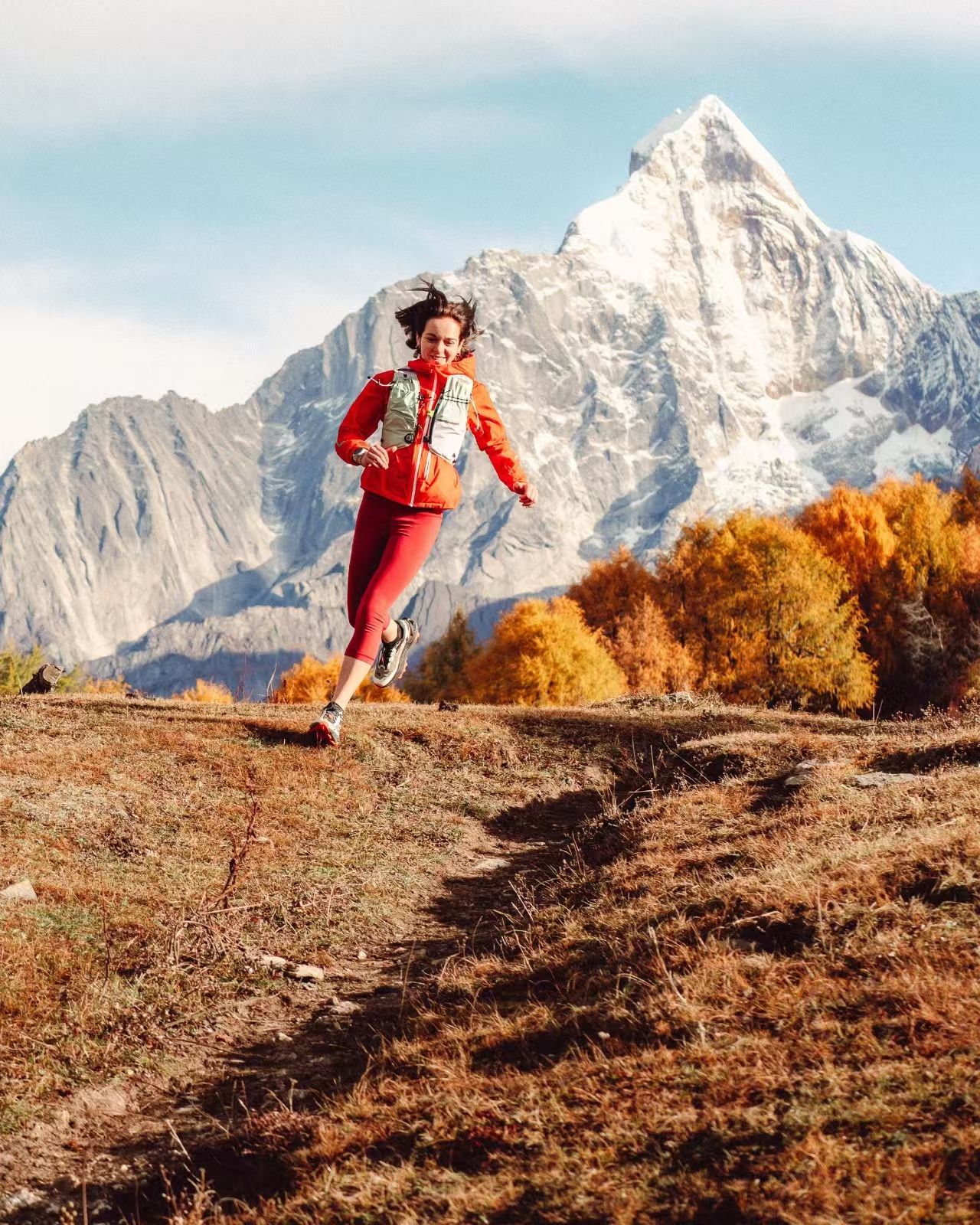
Da Feng is the largest of a quartet of peaks which collectively form the Four Sisters (or Si Guniang). Her perfectly formed Toblerone body keeps close guard of the river below, which flows obediently away from her. In the autumn months, the surrounding forests come ablaze with orange leaves, which burn brightly against the brown earth.
The colourful flags flapping from windows and telegraph poles announced our arrival into the autonomous region of Aba. The small village tucked into the valley below, hosts predominantly Tibetan families, living in small wooden homes with ornately carved walls.
As we moved further into the valley, more and more houses rose into view. Whereas the small village had previously been divided into two neat parts joined by a bridge, now three connecting roads were visible. The low lying houses lining the river were now crowded in by four storey hotels whose names were announced in brash red lights affixed to the walls.
A new feeling rose in me, replacing the car sickness I had felt on the way. This place, a spiritual home of mine, had changed. Worse - its mystery and magic seemed threatened. I felt my mouth open involuntarily as we crossed the bridge, coming face to face with the grotesque moustachioed face of Mr. KFC.
My first visit had been in 2019, when I had come as a wide eyed traveller to participate in my first ever trail race. It was one of the most profound experiences of my life. My ten hour long battle with snow and mud, was rewarded with immaculate views of crystalline lakes and startlingly beautiful ridgelines. I crossed the line with bloodied arms, tearful eyes and butterflies in my heart.
In all the three years of my pandemic-induced China exile, the imprint of Four Sisters never left me. And when at last China opened its gates again in 2023, I came back with the excitement of a child entering Disneyland for the first time. I was to be reunited with a long lost friend. Now, cresting the hill of the valley, I felt a pang of something harsher than sadness. A blend of loss and betrayal that I had never felt before.
I attempted to quell my inner turbulence, determined not to offend my fellow passengers who had begun snapping away frantically from open windows.
“My god, she’s a stunner”, one American journalist called out from the seat behind me. “Bigger than the little mounds you Brits have at home huh?”
When I looked again at Da Feng, I glimpsed briefly the same beauty that stunned me the first time. Although the village had swelled, the tallest rooftops still sat in shadows, dwarfed by her enormity.
I got out of the car and was hit by a thick aroma of meat. I turned and saw a local villager hacking away at the Yak’s severed remains, swinging from an iron hook. Beyond, steam rose from a large pot stewing local mushrooms and hunks of Yak meat. Our hotel, the Sichuan Dream, sat a few houses beyond.
Built just 18 months before, it was a perfect replica of Aba vernacular architecture, its walls painted bright yellow and supported with wooden beams. As I entered my suite, I was surprised to discover a Toto toilet with its heated rim, a Dyson-esque hair dryer and Lipton tea bags laid out beside the kettle. I sat down on the bed and sunk into the soft duvet beneath.
Struck by a sudden urge for coffee, I went out to find the woman at the front desk and asked if there was a shop nearby. She pointed at a small wooden doorway just a few houses along.
As I entered the small space, a voice floated out from behind the tooth-white La Marzocco, which stretched almost the entire length of the counter.
“Scan the code to order. But we’re out of Matcha cheesecake”.
I found the QR code stuck to a wooden stump on the ground and scrolled past an extensive list of flavoured lattes and fruit teas, until I found the flat white. After tapping in my WeChat payment code, I fell back on a sheepskin covered armchair. The steamer roared into life followed by the familiar gurgle of a milk frother.
“Where did you learn to make coffee?” I asked the barista, whose head had popped up to reveal a spikey buzz-cut. She swirled the small milk pitcher in neat arcs, her eyes fixed on the cup with complete concentration.
“Chengdu. I worked in a chain there for a couple of years and then moved here.” She planted a terracotta mug on the stump in front of me with steady hands. A perfectly formed leaf sat buried within the foam.
The provincial capital of Sichuan, four hours away by car, had been a pioneer in China’s rising coffee culture of the 2010s. Recent graduates, craving a slower pace of life, made a career for themselves setting up tiny coffee shops in the city’s narrow alleyways. Other Chinese metropolises looked on and soon went about replicating them, finding small spaces to fit with Ikea furniture and Italian coffee machines.
“Why did you set up here though? It’s miles away from your home.” I asked, perplexed that a trendy 20-something year old would end up here.
“I came here to hike a few years ago and couldn’t find a single decent coffee place. So I thought I’d create my own.” She spoke confidently. “I was the only one, but now two other cafes have opened nearby. They’re not very good though”, she said with a sly smile.
Sure enough, when I looked up the cafe on China’s food directory app Dazhong Dianping, Cafe Moonlight ranked top, enjoying a 4.8 star rating. The cafe quickly filled up with young women sporting Louis Vuitton handbags and a good-looking couple in matching adidas jackets.
My conversion was swift and absolute. By the third day, I had ordered a matcha latte to wash down the tiramisu slice I devoured.
The grief that had struck me in those first hours dissolved as I realised I was alone in my dismay at Mr KFC’s grimacing face. It became apparent that for most villagers, his arrival signified a step forward, a shift which could bring about possibilities and choice.
That the Sisters had changed irrevocably was true. But I tried to accept her new face as a transformation and not a tragedy