
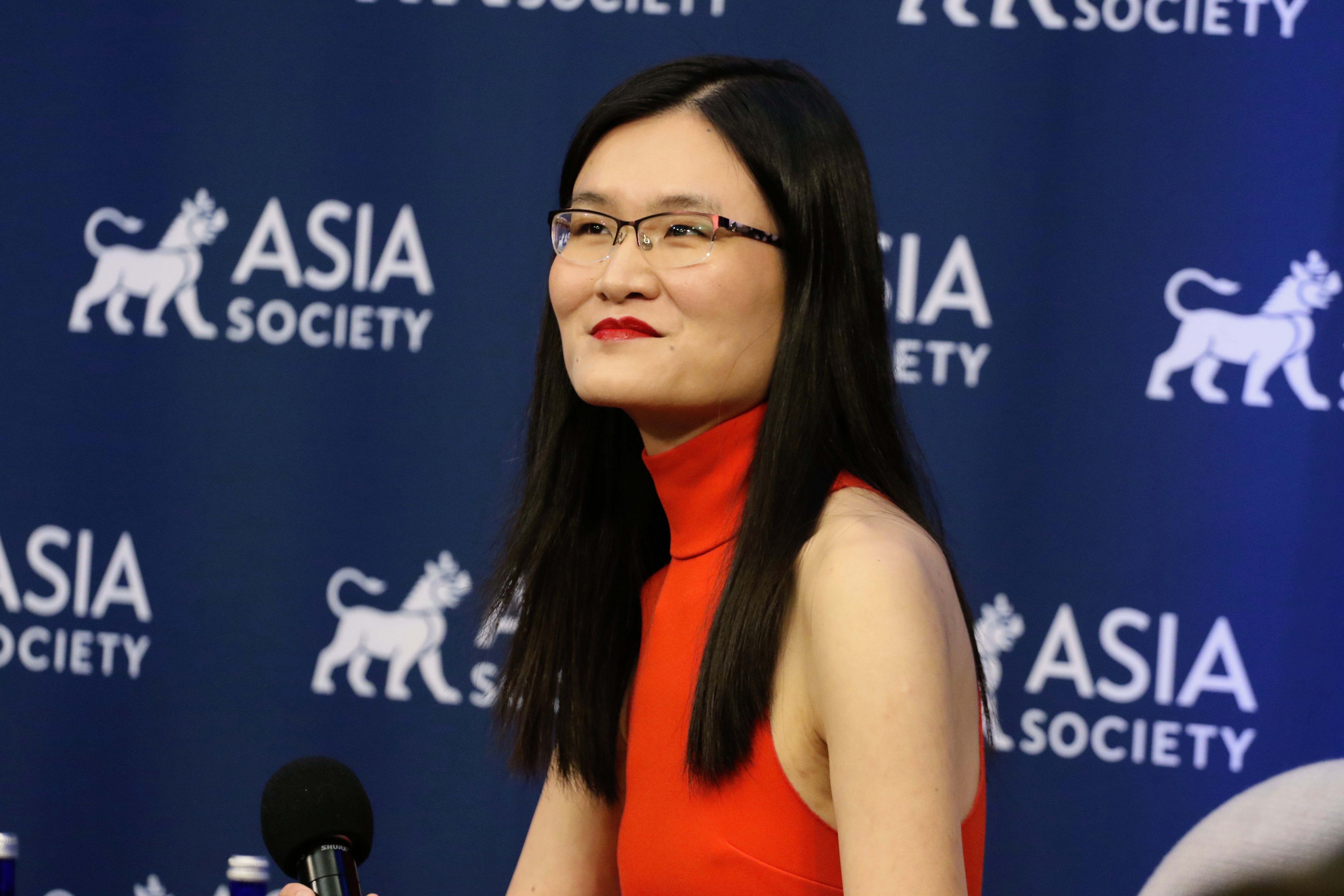
A Conversation with Yangyang Cheng, on Writing about Science and US-China Relations
This week, hosts Solarina Ho and Rui Zhong speak with Yangyang Cheng, a Research Scholar at Yale’s School of Law focusing on science and technology development in China and US-China relations.
In this episode, Solarina, Rui, and Yangyang speak on the struggles of scientists in the current political climate, the place of women in the intersection of politics and science, and China’s history and future in the geopolitical landscape. They also discuss Yangyang’s career as a researcher, writer, and academic, and delve into her tips for aspiring writers.
On what motivates Yangyang:
“I want a future where people are free, where people are equal in their humanity and in opportunities for self-realization.That is a future I want, and I want to find ways to contribute to achieving that future. I've been an academic my entire career, and so through my academic work, this is what I can do.”
On the coverage of China in Western legacy media:
“One always chooses what kind of information to consume. It is not entirely about whether or not China is just covered as a national security threat, because of biases of individual journalists, editors, or newsrooms.
It is because that is the question that somehow people have decided is more salient to their own lives, because if China is a threat, then they probably should care about it and read about it. Probably a way to think about it is: “Why should China be a threat?” Or “Who wants China to be a threat?” I think these are probably the more fundamental questions. “Who benefits from constructing China as a threat?”
On writing habits:
“I still consider one the most important questions to answer with regards to writing is motivation. And actually, when I was starting to write, I did read a number of books by writers about writing. The primary takeaway I get is that one just needs to write and believe strongly in oneself, as in having something to say that no one else could say for them.
Everything else is technical. And different people have different technical habits that work for them. Some people write first thing in the day, some people write late at night. Some people need to write every day for a couple of hours. And some people prefer to write consecutively over several hours to pack things all into a condensed period of time. I think these are technical things that really differ a lot between people. It comes from one who can try to find a way that works best for oneself.”
Shownotes:
Read more essays by Yangyang here.
Recommendations:
To Outlive Tyrannyby Yangyang Cheng
Beyond Representationby Yangyang Cheng
No Country for Women by Yangyang Cheng
Four is Forbiddenby Yangyang Cheng
Written on Water by Eileen Chang
About our guest:
Dr. Yangyang Cheng is a Research Scholar in Law and Fellow at Yale Law School’s Paul Tsai China Center, where her work focuses on the development of science and technology in China and US‒China relations.
She has published over 90 essays on these and related topics in major outlets including The New York Times, The Guardian, The Nation, MIT Technology Review, and WIRED, and have received several awards from the Society of Publishers in Asia (SOPA), Asian American Journalists Association (AAJA), and Bulletin of the Atomic Scientists.
Her literary criticism received the 2024 Kukula Award for Excellence in Nonfiction Book Reviewing from The Washington Monthly and a 2022 People’s Choice Award from the Los Angeles Review of Books. She is an editor at the Made in China Journal and hosts its 开门见山 | Gateway to Global China podcast.
She is also a co-host, writer, and producer of the award-winning narrative podcast series, Dissident at the Doorstep, from Crooked Media. She served on the inaugural jury for the Baifang Schell Book Prize from Asia Society and has been a judge for the James Beard Journalism Awards. Born and raised in China and trained as a particle physicist, she worked on the Large Hadron Collider for over a decade. In the fall of 2025, she was a Pritzker Fellow at the University of Chicago’s Institute of Politics.
About our hosts:
Solarina Ho is an executive board member of NüVoices, and a journalist and writer with more than two decades of reporting experience covering business, health, lifestyle, entertainment, and more. She has written for publications including The Walrus and The Globe and Mail, and is also the editor of research and publications at Nüora Global Advisors. Prior to freelancing, she spent nearly 15 years at Reuters. She has a deep interest in China, the environment, science and technology, arts and culture, and a particular passion and weakness for Asian dramas.
Rui Zhong is a writer and researcher living in Washington, D.C. Her interests are American and Asian policy, and how they intersect in a world of propaganda, extremist ideologies and upheaval. She is an executive board member of NüVoices.
Episode credits:
Producer: Wing Kuang
Editor, sound engineer: Rebecca Liu
NüVoices fellow: Suchita Thepkanjana
Managing Editor: Megan Cattel