
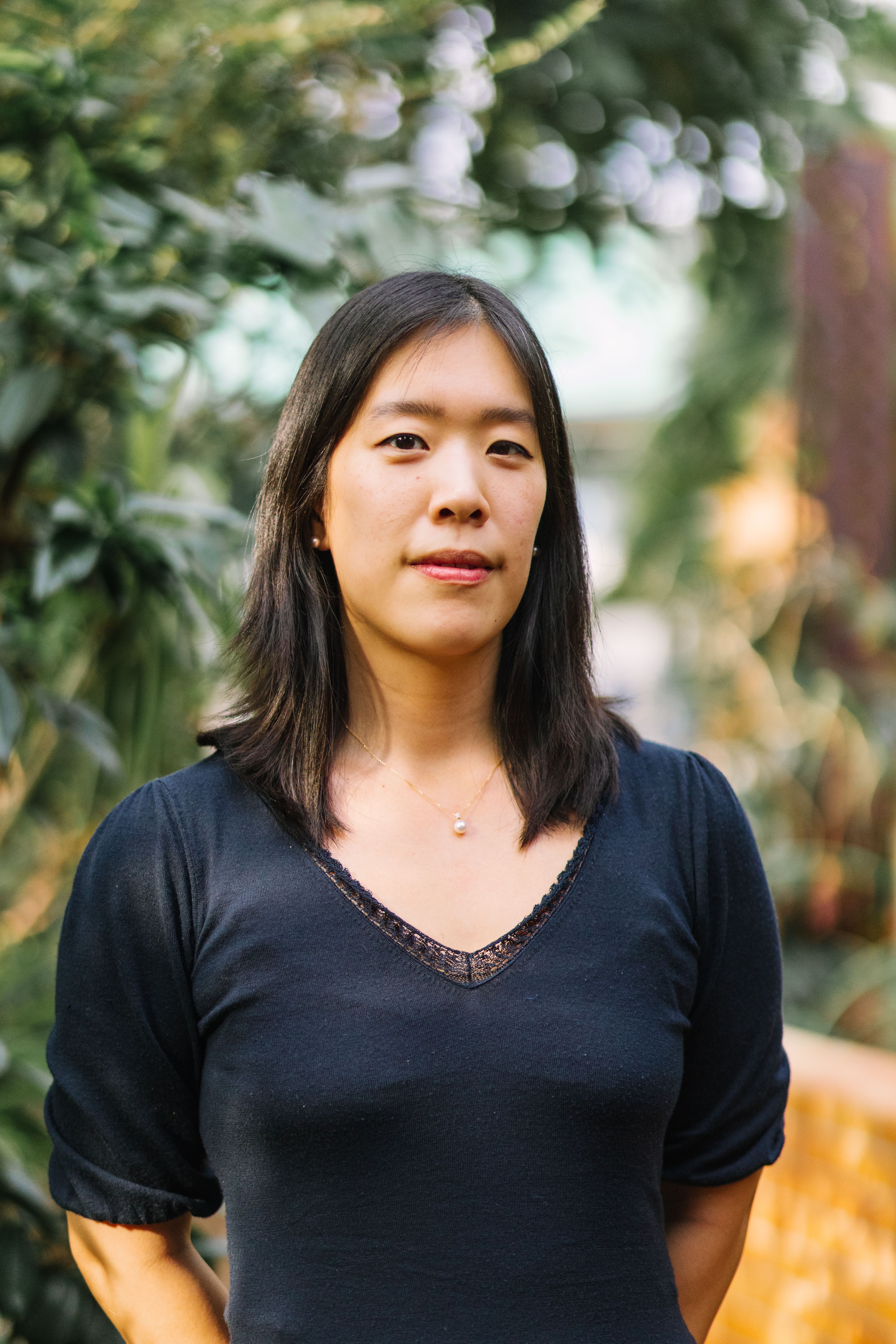
On writing and being a bad Asian with Lillian Li
This week, NüVoices podcast host Stephanie Tam interviews Lillian Li, the author of the new novel Bad Asians, which was released in February 2026. Lillian is also the author of Number One Chinese Restaurant which was selected as an NPR Best Book and longlisted for the Women’s Prize and the Center for Fiction’s First Novel Prize.
In this episode, Lillian discusses writing fanfiction as a teen, writing about friendships and finding unique perspectives in Asian American literature.
On creating strong characters and illustrating their friendships:
“So much of my writing is character-driven, and so initially I hadn't necessarily picked an era that these characters would be in. I just knew that I wanted to write about these characters as an incredibly close-knit friend group.
As I was writing, I was like, in order to show how close they are, they have to be hanging out all the time, preferably in their parents' basements, because that's how that was sort of my image, the image that started this whole writing journey.”
On writing about a “bad Asian”:
“This book is really about [being] in the community. It’s for the community, by the community. It’s not an outsider looking in, and I think that this title [Bad Asians] basically shows that even within our own Asian American communities, where — maybe policing is too harsh a word — we're certainly keeping people in check to say like this is how our community does things, and if you step out of line, we might jokingly correct you, but it's still a correction to say that this is not how we as Asians should be behaving.”
On being part of the Millennial Generation in 2026:
“I think a lot of American society around this time, the Millennial Generation, was based on a very specific checklist for success, and also this idea of meritocracy that if you complete this checklist, you will get the prize at the end.
And as we all came of age as a society, we realised that was not the case. What are we supposed to do to move forward? How are we supposed to actually define a new success and define our own rewards?”
Shownotes:
Stephanie's self-care tip: Strength training
Lillian’s self-care tip: Bed rotting after long periods of productivity
About Bad Asians:
Diana, Justin, Errol, and Vivian were always told that success is guaranteed by following a simple checklist. They worked hard, got A's, and attended a good university—only to graduate into the Great Recession of 2008. Now, despite their newly minted degrees, they’re unemployed and stuck again under their parents’ roofs in a hypercompetitive Chinese American community. So when Grace—once the neighborhood golden child, now a Harvard Law School dropout—asks to make a documentary about the crew, they agree. It’s not like her little movie will ever see the light of day.
But then the video, Bad Asians, goes viral on an up-and-coming media platform (YouTube, anyone?). Suddenly, millions of people know them as cruel caricatures, each full of pent-up frustrations with the others. And after a desperate attempt at spin control further derails their plans for the lives they’d always imagined, the friends must face harsh truths about themselves and coming of age in the new millennium.
Lillian Li’s novel wryly captures a generation shaped by the rise of the internet and the end of the American dream. An epic tale of friendship and family, Bad Asians asks, Can the same people who made you who you are end up keeping you from who you’re meant to be?
About our guest:
Lillian Li is the author of the novel Bad Asians, and Number One Chinese Restaurant, which was an NPR Best Book, and longlisted for the Women’s Prize and the Center for Fiction’s First Novel Prize. Her work has been published in the New York Times, Granta, One Story, Bon Appetit, Travel & Leisure, and The Guardian. Originally from the D.C. metro area, she lives in Ann Arbor.
About our host:
Stephanie Tam is a writer and radio journalist. She has worked for various podcast shows and radio networks, including Freakonomics Radio, Radiolab, and BBC World Service. Her writing has been published in The Believer, Slate, and Harper’s Bazaar, among others. Previously, she completed two master’s in world literatures and evidence-based social intervention at the University of Oxford as a Daniel M. Sachs Scholar, where she researched mental health in refugee children.