
How to build a US journalism career as an international student
As another fall semester gets underway, many international students will be newly-arrived in the United States, and some will already be thinking how to build careers and lives here. Four years ago, Leying Tang was in the same position. Arriving at NYU as a graduate journalism student, she took internships in video and documentary production, pivoted to audio journalism after graduation, and eventually became a full-time producer at CNN Podcasts. She offers actionable tips that you can put in practice every day.
1. How to figure out your career goal
Ask what kind of journalist you want to become – do you want to be an on-camera reporter, a video producer or a data journalist? You may not yet have an answer, but your time in journalism school will give you some clues.
First, look for people in the industry whose careers inspire you. Journalism school provides opportunities to meet industry professionals - your professors, alumni and guest speakers – who can inspire you to think about what kind of journalist you want to become.
The guest speaker at NYU’s 2022 journalism orientation was Lingling Wei, the chief China correspondent at The Wall Street Journal. Her talk made me feel that working full-time in an US newsroom was not out of reach. At a Business Insider info session, I met Lilian Manansala, an editor and videographer. Her short documentaries at Business Insider showed me that long-form explanatory video journalism could be a full-time career at a major news organization. That inspired me to create explanatory digital videos for my own portfolio and pursue a career as a video producer after graduate school.
Second, use your classes to pursue a project you’re genuinely interested in, as it will motivate you to produce the best work you can and discover how far you can push yourself. You will also learn what you like and dislike, which can shape your career goals.
In my first year of graduate school, I enrolled in photojournalism and creative writing classes where we had to do a long-form reporting project. Because I enjoy K-pop culture, I reported a story about the K-pop dancers who rehearsed at Moynihan Train Hall: it became my first byline beyond student media in the US. To make it as strong as possible, I went many times to watch rehearsals, talk to the dancers and get to know the community. I took hundreds of photos of their rehearsals at Penn Station and performances in Times Square. This project uncovered my passion for shooting and editing photos, so I opted to take more visual journalism classes. It also built my confidence and solidified my goal of becoming a video journalist.
Build a portfolio to showcase your work and highlight your strongest projects in your resume. Those will be the ones to discuss when you apply and interview for internships.
2. Building a professional portfolio
While a portfolio of student work can help you secure an internship, it may not be enough to land a full-time job in a professional newsroom. You need strong, high-quality professional work. One of the best ways to get those clips is to report or produce your own stories during internships.
You might ask: “I’m just an intern – how can I get this kind of opportunity in a professional newsroom?”
Consider interning at a smaller newsroom. I got my start in audio at WJFF Radio Catskill, a local station serving the Catskill Mountains of New York and Northeastern Pennsylvania. With only three full-time newsroom staff and two interns, they gave me full freedom to pursue stories I was interested in and scope to try different aspects of audio storytelling. I hosted and produced an audio story about the differences between how Chinese Americans and people from China celebrate Chinese New Year. It was personal to me and relevant to the local Chinese community. I also reported on the first and only all-female scout troop in Sullivan County, which got positive local feedback.
Second, take the initiative to pitch stories and learn what kind of stories the team is looking for. During my 10-week summer internship at NBC News’ digital video desk, I tried to pitch at least one story every other day, to turn some of those ideas into published stories. I gradually learned what the team needed by reflecting on which pitches didn’t work and why. They wanted timely stories with strong visuals that could drive the narrative. While reviewing footage from local news stations, I saw a man shouting for help in Lahaina during the 2023 Maui wildfires, and pitched the story to the team. My supervisor also thought the footage deserved more attention. The video received more than 130,000 views on YouTube. It became one of the strongest pieces in my portfolio, demonstrating I could produce quick-turnaround news videos.
3. Getting your foot in the door
Apply, apply, apply! Keep an open mind about opportunities. You also never know how different experiences may lead you toward your career goal.
After graduation, I applied for entry-level positions in TV and video journalism. Nothing worked out. Then I saw an internship opportunity at WJFF Radio Catskill in an email from the NYU career office, and thought, “Why not?” This internship helped me land a 6-month production assistant role at The Journal podcast.
Tailor each cover letter to the position. As well as making a good first impression, the process will ensure you to think about why you want the job, what attracts you in their work, and what you hope to achieve next. Before applying for my current role at CNN, I listened to multiple episodes of each show, writing down what I liked about them and what I might do differently if I joined the team. I also knew that, as my next career step, I wanted to write and produce episodes every day, rather than primarily assist a show.
Prepare thoughtful questions for an interview, whether about your interviewer’s experience, the show, or the newsroom culture. The best starting point is your curiosity. During one of my interviews at CNN, I was curious how the 5 Things podcast could produce multiple quick-turnaround episodes in a single day, so I asked a senior producer who worked on the show. Remember that you’re also interviewing the company when they interview you. You can ask what journalists might learn from working on their team.
Follow your heart when choosing between offers. When I was offered a production assistant position at The Journal podcast, I also received another opportunity with a higher salary as a full-time video producer at a Chinese short drama company. But I decided to stay in journalism. I wanted to follow my curiosity and see where audio journalism could take me. Now I’m producing video podcasts at CNN.
4. Building your network
I’ve heard about the importance of networking from the day I arrived in the US, but I’ve spent four years figuring out an approach that works for me. Networking can be awkward and overwhelming, but it can also be fun. I think of networking on three levels, each requiring me to step a little further outside my comfort zone.
First, build your network at school. My graduate program’s director organized a dinner before the class began, which was my first chance to meet other journalism students around my age in the US. Collaborating with students from other programs in different classes also helped me build a circle of friends outside my own program. Now we work at different media companies, but we catch up often, sharing what we’re hearing about the industry and what we’ve learned on the job. I’ve also stayed in touch with my professors at NYU, emailing them with career updates and asking them for career advice. The network I built at school is my safety net and one of my support systems in the US.
Second, be strategic about networking events. It’s easy to feel lost or overwhelmed if you don’t have a specific goal in mind. Beforehand, I review the attendee list, look at people’s career paths on LinkedIn, and reach out to those I most want to speak with. Once I’m there, genuine curiosity about someone is often the best conversation starter. If I have a good conversation with somebody, I’ll connect with them on LinkedIn or ask for their contact information so we can keep in touch. I usually go to networking events with a friend because it makes me feel more comfortable approaching people I’ve never met before. I also give myself some breathing room to relax and enjoy the event.
Third, reach out to people on LinkedIn for coffee. This is the most intentional kind of networking because I usually reach out with something specific I want to learn. Before the coffee chat, I review their LinkedIn profile, look at their portfolio, and write down specific questions. For example: What is their perspective on the team or role? What skills do they think are most important for the position? If I want a similar role, what experience am I currently missing? What advice would they give on my portfolio? I also prepare a brief introduction about myself, what I’m currently working on, and why I’m interested in speaking with them.
Don’t be hard on yourself when a coffee chat or networking event doesn’t lead anywhere. Sometimes you may not get a response, or you may have one coffee chat with someone and never speak to them again. But you never know where one brief conversation might lead. A recruiter at the 2023 NYU career fair reached out to me a year later about interviewing for a role at a major news organization. When you meet people who genuinely want to support you, make an effort to stay in touch and support them in return. Meaningful professional relationships require effort from both sides.
5. Keeping momentum and staying resilient
Alongside the successes, I’ve faced a lot of rejection along the way. I didn’t get a full-time position right after graduation. I’ve been turned down at different stages of the interview process. It can be hard to maintain momentum and resilience when things go badly .
When I receive a rejection, the first thing I do is cry. It’s the most direct and efficient way to let out my negative emotions. I give myself a break to process my disappointment and distract myself by doing something else, perhaps going for a walk or reading a book.
Then I reflect on it: Why didn’t it work out? Once, I applied for a job in Texas. I didn't get the offer, so I emailed the hiring manager for feedback. He told me I was one of their top candidates, but lacked local reporting experience. And he gave me good advice, to pitch stories that show you know the region.
I remind myself that even when something doesn’t work out, the effort I put in wasn’t wasted if I learned something, that every step counts, and building a career takes time.
In addition, the immigration environment is becoming more challenging for international students. Several universities have paused Curricular Practical Training (CPT) - a form of work authorization that allows eligible international students to participate in off-campus training related to their curriculum - after new federal guidance changed the requirements.
It’s important to stay informed about changes in immigration policies, but try not to become overly anxious, because we can’t control those changes. Focus on what you can control: learning in class, working on your reporting projects, and continuing to build your network. Policies may change, but the skills, portfolio, and professional relationships you build will stay with you. In a polarized era, newsrooms need the perspectives international journalists bring just as much as international journalists need opportunities in those newsrooms.
I recommend keeping a folder of your work and looking back at the pieces you’re proudest of. It can remind you why you chose this path in the first place, help you to regain momentum and keep moving forward.
About the writer
Leying Tang is a bilingual multimedia journalist with an MA in multimedia journalism from NYU who works as an associate producer at CNN Podcasts. She formerly worked at The Journal podcast and WJFF Radio Catskill on national and local news stories in the US. She previously worked at NBC News' digital video desk and Beijing Bureau, where she contributed to US national breaking news coverage and reported on major events in China. She also worked on a PBS Frontline investigative documentary about Jack Teixeira which won two Emmy nominations in 2024.
About the editor
Mary Hennock reported for the BBC from London then as Beijing correspondent for Newsweek. Her work has also appeared in The Guardian. She now works primarily as an editor on in-depth reports with a China focus.
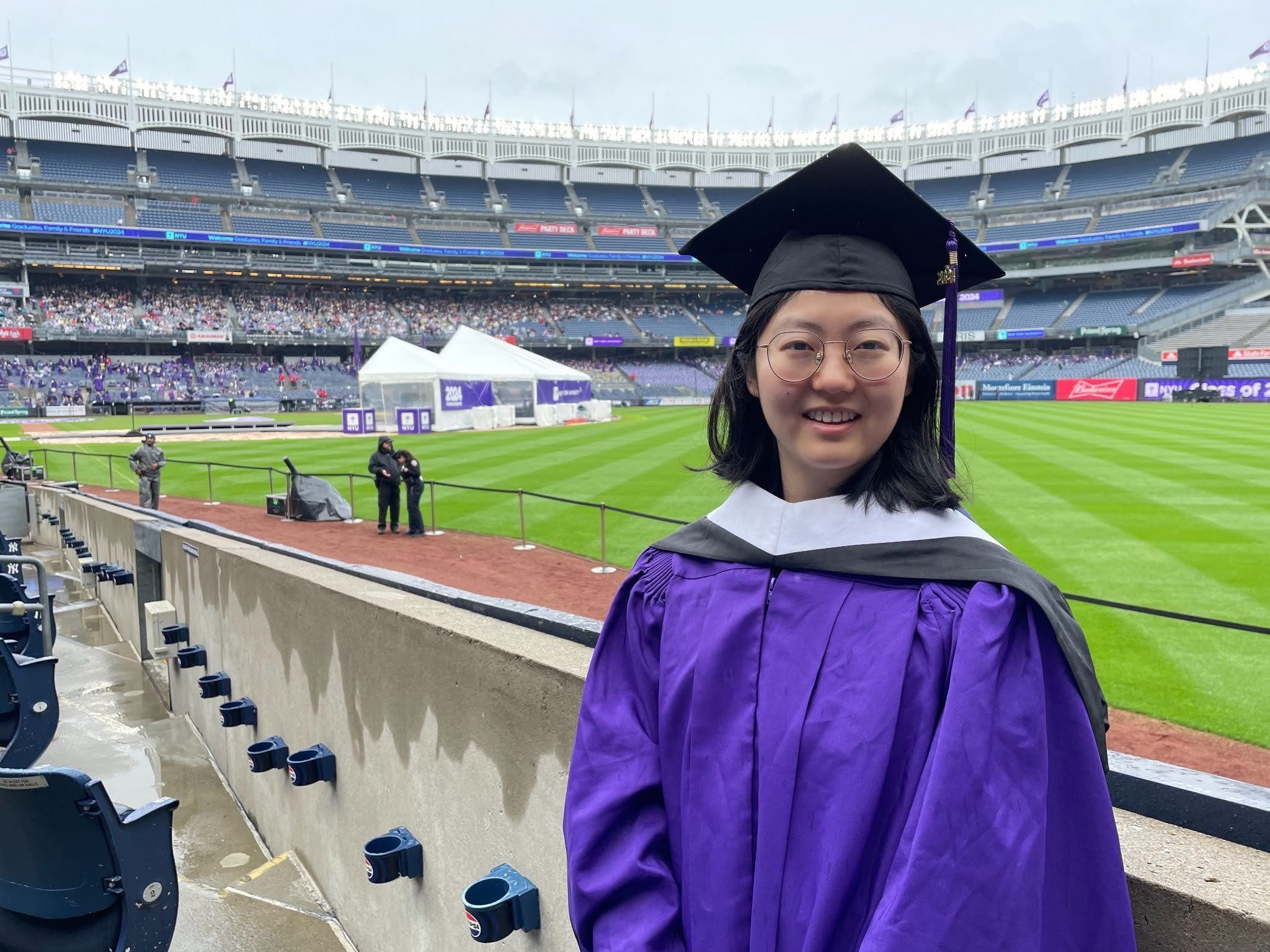
Photo credit: Photo courtesy of Leying Tang. Leying at NYU’s graduation ceremony. May 16, 2024.