
How the world views China
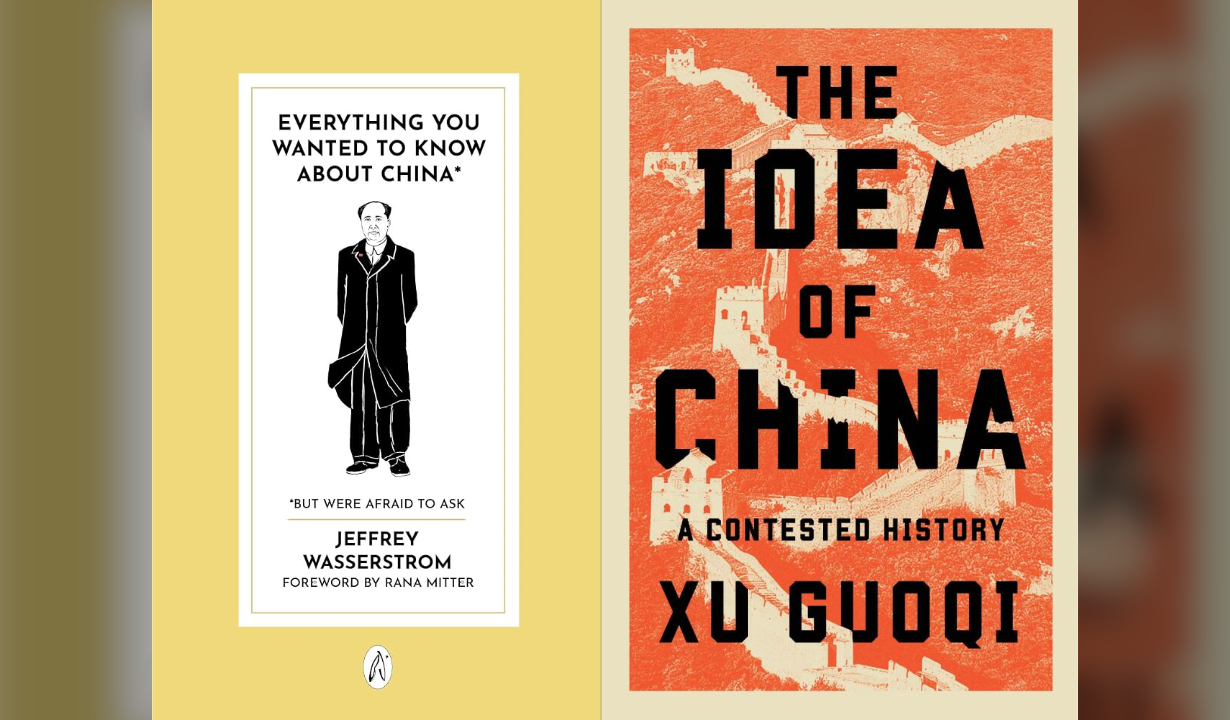
Understanding China has become a matter of global importance not only due to growing concerns over security and deteriorating Xi Jinping-Trump relations, but also recent soft power successes like TikTok, Labubu and Chinese dramas. At a time when western audiences are becoming increasingly curious about the nation, two recent books by leading China-focused historians seek to explain what China is and how it should be understood: Everything You Wanted to Know About China: But Were Afraid to Ask by Jeffrey Wasserstrom, an American sinologist specialising in modern Chinese history; and The Idea of China: A Contested History by Xu Guoqi, a history professor at the University of Hong Kong.
Wasserstrom’s short primer (just 110 pages long) is a succinct entry-level introduction to China studies that unpacks common political misconceptions about China in mainstream Western media. The book is structured in a Q&A format, opening with a brief overview of modern Chinese history, focusing on Mao Zedong’s rule as an essential context for understanding contemporary politics. The text then moves on to examine China’s political system and international influence, before turning to widely discussed domestic issues like education and censorship. Aimed at Western audiences with limited prior knowledge of the country, the book does not aim to provide a complete guide to China’s politics, but rather to cover foundational topics and encourage further exploration.
While the text ambitiously promises to deliver “everything you wanted to know about China”, its scope depends on who “you” are. Much of the text caters towards explaining or critically analysing common tropes and themes about China that readers of mainstream western media would typically be exposed to. For example, the chapter on Chinese history concentrates on Mao Zedong and his similarities to current president Xi, the Chinese leader who has received the greatest Western media attention since the 2000s – a popular comparison. Nearly half a chapter is also devoted to the 1989 Tiananmen Square protests, a significant symbol of authoritarian rule in Western reporting on China. The last chapter frames Chinese culture through the lens of “control”, providing a lens on how Chinese people live with censorship. In short, the primer focuses on the issues that most often spark public curiosity.
By combining focused historical analysis with a concise, conversational writing style, Wasserstrom makes the complexities of modern Chinese politics accessible to non-specialist readers. The book may offer little that is new to those already familiar with Chinese history or readers seeking a broader analysis of Chinese society beyond a Western political framework, but it succeeds as an engaging primer on the historical and political contexts that shape the country today.
While Wasserstrom seeks to provide an overview of modern China, Xu interrogates the very concept of China. As China is increasingly perceived as a powerful political rival, technological leader, or influential cultural force, Xu’s The Idea of China: A Contested History extensively studies how the idea of “China” came to be constructed, contested, and refined across time. A deep dive into the concept of the country through varying perspectives – including those from China, Japan, the US and the Soviet Union – the text traces the ideas of China from the fifth century BC to the present.
Xu argues that while the act of defining China can be nuanced and “problematic,” it’s crucial to do so not only for Chinese people, but also for the wider world. Yet like Everything You Wanted to Know about China, Xu’s book often adopts a top-down political perspective. Although the cases of Hong Kong and Taiwan, where Chinese identity is the most contested, are discussed, the analysis focuses largely on how rulers have shaped and deployed the concept of China, rather than the voices and views from the grassroots.
Despite its efforts to interrogate the idea of China through a critical lens, the book focuses too much on documenting the evolution of the definition of China and not enough on explaining why these historical shifts matter today. For instance, the chapter “Constitutional Trouble” explores why China didn’t have a constitution until the end of the civil war between the Nationalist and Communist governments. Although the section clearly charts how the definition of the country – as well as its citizenship – has changed from the 1950s until now, it provides little analysis of the implications of this protracted road to becoming a constitutional state with a defined legal conception of nationhood.
In addition to providing readers with a keen sense of the country’s evolution both historically and politically, both books heavily emphasise the enduring influence of Confucianism, defined by Wasserstrom as a Chinese school of thought “calling for stable hierarchies and veneration of tradition” that originated 2,500 years ago. The influence of Confucianism is used to explain Xi’s obsession with order in Wasserstrom’s primer; Xu also repeatedly highlights the use of Confucian ideas by successive Chinese governments to legitimise imperial and authoritarian rule in his text.
Comprehending modern China requires examining the historical events and traditions that continue to shape political authority – as well as how they’re interpreted by those in power over the centuries. Everything You Wanted to Know About China: But Were Afraid to Ask and The Idea of China: A Contested History are part of a growing number of publications by academics attempting to bridge the gap between scholarly knowledge and public interest in China’s global rise. No doubt, the demand for such works will only continue to increase.
Everything You Wanted to Know About China: But Were Afraid to Ask is currently out in the UK and Southeast Asia by Bui Jones Books, and forthcoming in other markets from Stanford University Press in 2027. The Idea of China: A Contested History is published by Harvard University Press, available to buy and read online.
About the writer
Angel Sun is a freelance arts and culture journalist. From film and book reviews to long-form features exploring the East Asian diaspora and gender issues, her writing has been featured in Resonate Voices, The Indiependent, Initium Media, and local UK publications like Slice Tower Hamlets. She is also the Social Media Editor at NüVoices. Check out her portfolio, Instagram page, and LinkedIn to connect.
About the editor
Jessie Lau is a feminist writer and journalist telling stories about power and identity. Her work has appeared in The Guardian, BBC, Los Angeles Review of Books, CNN, The Economist and many more publications. A media lecturer at Kingston University and judge for the 2026 Orwell Political Writing prize, Jessie also founded New Tide, Britain’s only network for East and Southeast Asian journalism.